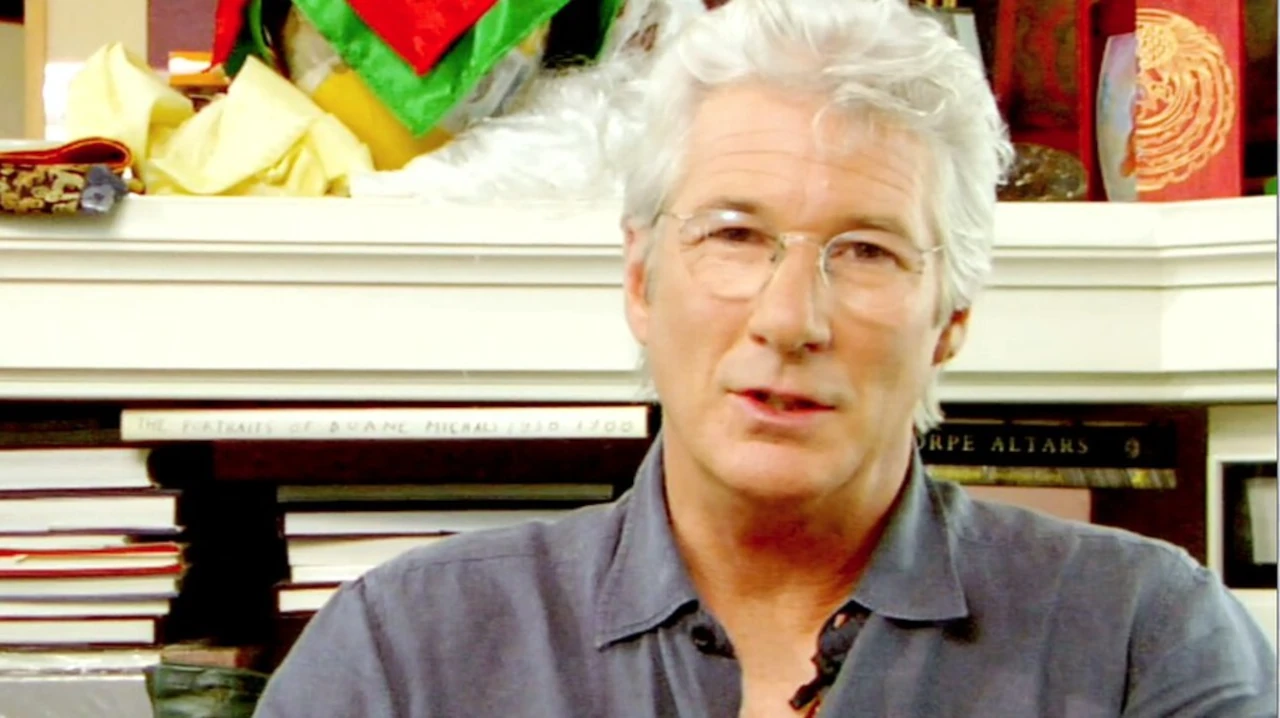
When people talk about Richard Gere, the phrase “he disappeared” often comes up. But did he really fall from Hollywood… or did he simply walk away from the spotlight on his own terms? The answer is far more interesting than a typical rise-and-fall story.
From Heartthrob to Hollywood Royalty
Let’s rewind to when Gere was everywhere. In the 1980s, he wasn’t just a movie star—he was the movie star. His role in American Gigolo turned him into a global symbol of style and confidence almost overnight. Then came An Officer and a Gentleman, which proved he had both charm and emotional depth.
But the real explosion came in the 1990s. If you’ve ever watched Pretty Woman, you already know the impact. Paired with Julia Roberts, Gere delivered one of the most iconic romantic performances in film history. At that point, he wasn’t just famous—he was untouchable.
And just when people thought he might slow down, he surprised everyone again with Chicago, even winning a Golden Globe Award. Not bad for someone already considered a veteran.
So… What Happened?
Here’s where things get interesting. Gere didn’t suddenly lose talent, popularity, or opportunities. Instead, he started making different choices.
Rather than chasing big Hollywood blockbusters, he leaned toward smaller, more meaningful films. Movies like Arbitrage and Norman: The Moderate Rise and Tragic Fall of a New York Fixer showed a more complex, thoughtful side of his acting. Critics loved these performances—but they didn’t have the same mass appeal as his earlier hits.
In simple terms: he didn’t disappear… he just moved to a quieter stage.
The Political Twist
Another major piece of the puzzle is his activism. Gere has long supported Tibet and maintains a close relationship with the Dalai Lama. He has openly criticized China’s policies, which is where things get complicated.
Today, Hollywood is heavily connected to the Chinese market. Big studios often think globally, and that sometimes means avoiding controversy. Gere’s strong political stance likely made him a less “safe” choice for major international films.
It’s not an official ban—but in an industry driven by money and markets, it definitely matters.
Hollywood Changed Too
At the same time, Hollywood itself transformed. The industry shifted toward superheroes, sequels, and massive franchises. The kind of films Gere excelled in—smart, character-driven dramas—became less common.
So even if he wanted to stay in the spotlight the same way, the spotlight itself had moved.
A Different Kind of Life
Now here’s something many people don’t realize: Gere didn’t just change his career—he changed his lifestyle.
In recent years, he moved to Spain with his family, choosing a calmer, more private life. Less red carpets, more real life. He’s also deeply involved in humanitarian work and spiritual projects, including films connected to his beliefs.
That doesn’t sound like a fall. It sounds like a reset.
Is He Still Acting?
Yes—just not in the way people expect. Gere still takes on selective roles and works on projects that actually interest him. He’s not trying to dominate the box office anymore, and that’s by design.
Think of it this way: he went from being a global superstar to a selective storyteller.
So Is This Really a “Fall”?
Not really.
What looks like a decline from the outside is actually a shift in direction. Gere didn’t fade away—he stepped away from the race. He traded constant fame for meaningful work, personal freedom, and a quieter life.
And honestly, that might be the most successful move of all.
Final Thoughts
The “fall of Richard Gere” isn’t a story of failure—it’s a story of choice. From blockbuster icon to thoughtful actor and activist, his journey shows that success doesn’t always mean staying in the spotlight forever.
Sometimes, it means knowing when to leave it behind.
And in Gere’s case, he didn’t just leave—he rewrote the ending entirely.